

Precast wall panels are construction componets that are cast in the factory, cured, and then transported to the project site for assembly. Standard wall panels are 90MM thick and 600MM wide, with the length dependent on what the client needs.
Since precast wall panels are cast in long strips of even 100M or more depending on the size of the production yard. It’s possible to get long spans of panels. However, the longest span that is structurally sound is around 4M. Interestingly, you will rarely see such a span in use anywhere, as most houses will go for spans between 2.4M and 3M depending on how high you might want your ceiling to be.
Use Cases of Precast Wall Panels
Wall panels have three significant use cases when it comes to construction. The first is walling the house. Getting the number of panels required for your house is easy. Just take the total length of your wall in meters and divide it by 0.6M or (600MM). That will give you the exact number of panels required to wall your house fully. For a standard house, the walling takes 2–3 days to complete, depending on the number of individuals carrying out the installation.
The panels have grooves that interlock with each other, forming a solid continuous structure. To hold them into place, C- or U-shaped steel channels are used on top or at the bottom. Then a ring beam is added at the top to guarantee compatibility.

A common issue with houses and other structures done using precast wall panels is cracking at the edges where the panels join after a while. This is mostly caused by earth movement. To address this issue, at Fortis we prefer to build columns around the wall to ensure compatibility, coupled with the ring beam, which should hold the wall panels into place firmly over the years. Also, between the joints where the wall panels meet, we add a fiber mesh and plaster the joint.
The second use case for wall panels is on the slab. They can be used for either the foundation slab or the normal slab for high-rise structures. Usually beams are used to hold 1M wall panels into place before a screed is done to complete the slab.

Fence Using Precast Wall Panels
The third use case is for the precast perimeter wall or fence. Wall panels are used with H-shaped beams that act as columns to hold the panels in place. The standard size of a wall panel used here is 3M. However, unlike the house wall panels that are installed vertically, here the panels are stacked together horizontally. For every 3M space, four wall panels are stacked above each other, bringing the height of the wall to 2.4M, which is the standard height.
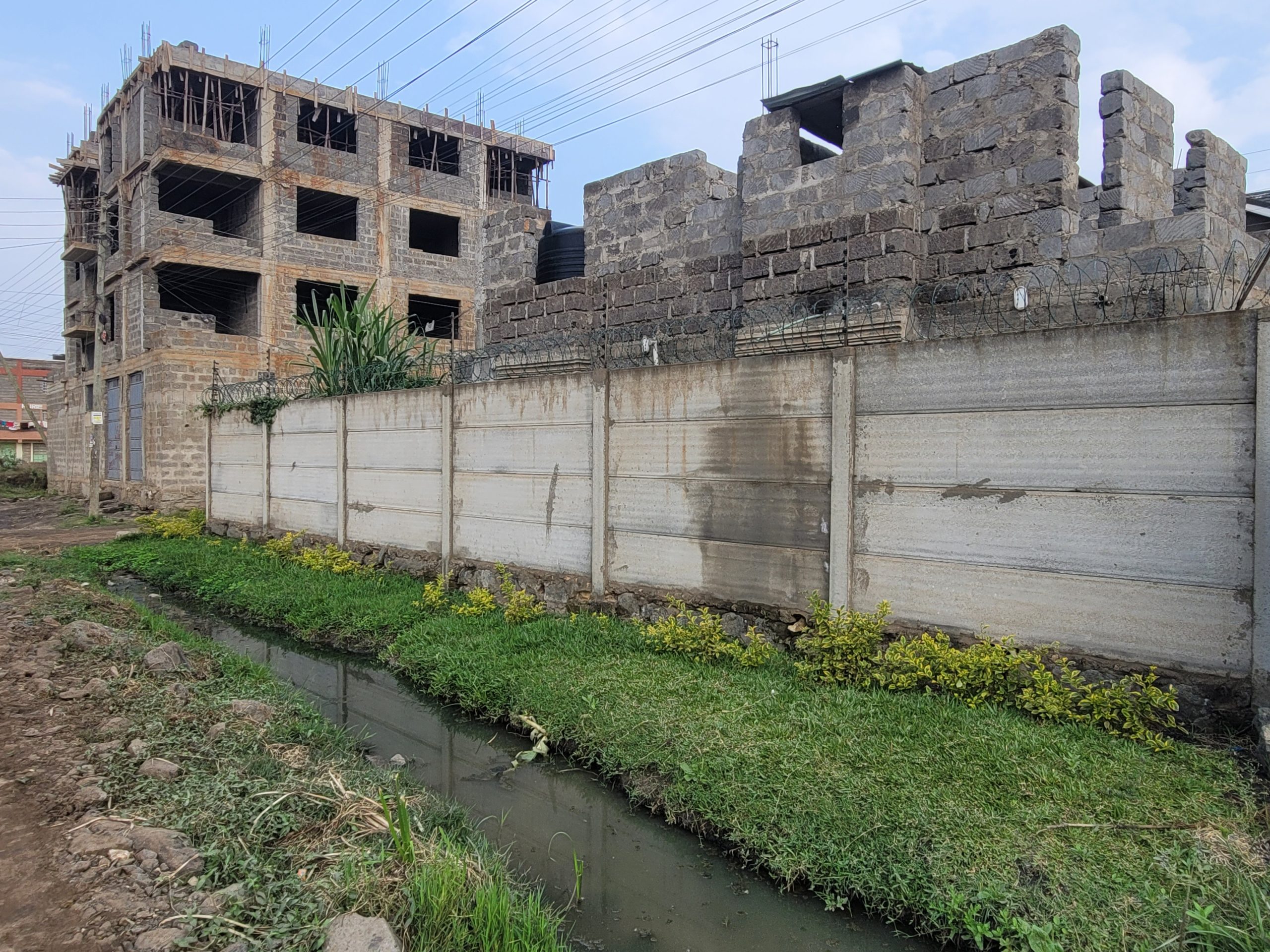
If you want to know how many wall panels you will require to fence your piece of land, you can divide the total length of the fence in meters by 3 to get the total number of spaces. Then multiply by 4 to see how many wall panels will be required for the job. See detailed calculations on a precast perimeter wall here.
You can learn more about how to use precast technology for your construction project by clicking here.